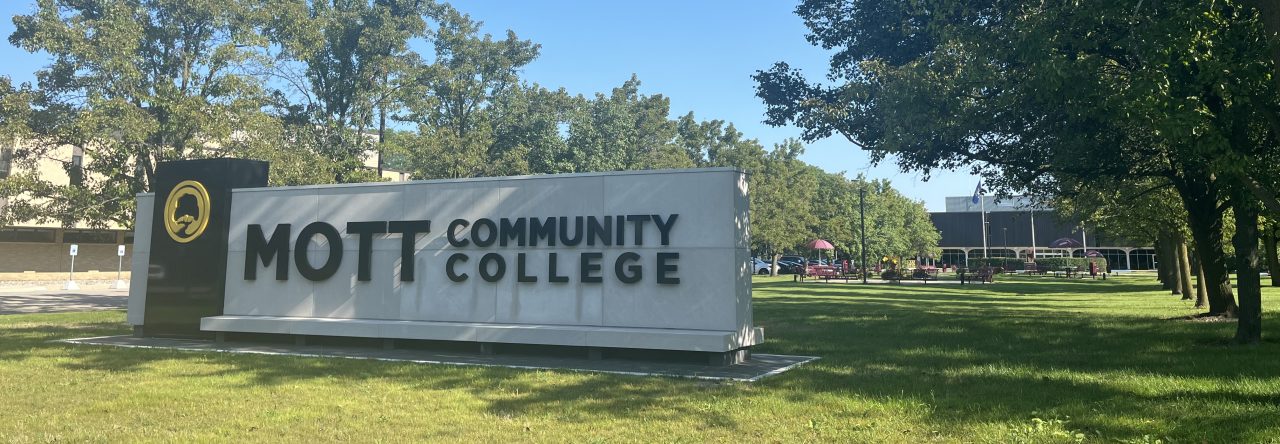
Few people in the state of Michigan are better-suited to talk about community college leadership than Steve Robinson, the president of Lansing Community College. Robinson has been president of LCC since 2020. Prior to that, he was president of Owens Community College in Ohio, and he also served as a dean at Mott Community College for seven years.
Robinson doesn’t address Mott’s board specifically in two posts he wrote on LinkedIn over the weekend, but it’s clear he was writing with them in mind.
In his first post, “Now Is Not the Time to be Provincial in Seeking Higher Ed Leadership Talent,” Robinson discusses in great depth some of the innovative ideas that he’s seen leaders from outside of Michigan bring into the state in his nearly 30-year career. This is relevant, of course, because the Mott Community College Board of Trustees voted to limit its presidential search to only candidates who are in Michigan. Robinson writes:
Consider the relatively-new college president in Michigan who brought his deep commitment to student success in athletics to a struggling small rural college in our state. Through his vision and commitment, enrollment and student engagement are up through a redesign he brought with him from experience gained in Louisiana. In addition to transforming that college, he inspires all of us with the power that community college athletics can have to drive improvement in enrollment and student achievement. Or look at the early accomplishments of the CEO of one of our state’s flagship community colleges, an individual who learned our craft leading colleges in Indiana and Utah prior to joining us here in Michigan. The differences in state government, policy, and funding formulas have allowed this leader to help us re-frame our thinking about this important work in Michigan. Look north to the Upper Peninsula, where one of our very important community colleges had very big shoes to fill when their beloved long-term president announced her retirement. That college’s new and innovative leader came from nearby Minnesota, bringing with her a rich and innovative set of experiences for how this very difficult job is performed in a different (but culturally-adjacent) part of the country. Another one of our incredible community colleges is led by a CEO who gained his experiences in Maryland, placing student success and equity at the center of our important community college work. With the support of his board and community, this leader has singlehandedly organized community college presidents from across the country to protect and defend our student success work from political attack, placing Michigan at the center of this important project. One of our state’s longest serving community college presidents still draws on his previous tenure in Iowa and Kansas, sharing these insights from outside of Michigan after more than 20 years of leadership here in Michigan. I could go on. Many other Michigan community college CEOs spent substantial portions of their careers in other states; as a group, we greatly benefit from these experiences, which also return value to the colleges each of them serves.
Another post, “Why Colleges Shouldn’t DIY the Search for President,” is extremely relevant based on Mott’s board deciding to form their own search and hiring committee rather than relying on the expertise of a search firm that specializes in finding executive talent in higher ed. Robinson writes:
A DIY search process for the college’s top job can send up a variety of red flags for aspiring presidents, especially if the calendar of that search appears truncated or rushed. A third-party search firm adds credibility to a search in ways that might not occur to individuals who have not been through one. Think about this process from the perspective of an aspiring president. Early on, candidates for college presidencies have all kinds of questions about the college and its context that are not in the candidate and institutional profile. In fact, the information potential CEOs want most is probably not in the official documents about the search. What are the current obstacles, barriers, and shortcomings of the college? Is there turmoil, strife, or controversy lurking under the surface? What kind of candidate is the college really looking for? Are there difficult decisions that need to be made by the next CEO? Veteran consultants who do this all the time are much better at answering these questions with candor. Further, it is far more comfortable for a presidential candidate to ask these questions of a neutral third party. Remember: for the candidate in a presidential search, everyone at the college is either a potential subordinate (including the HR folks handling the details), or a member of the college’s governing board (and therefore the candidate’s new boss). Interfacing with an external firm in the early stages of the process is far better for all concerned.
Not that Mott’s board is in any way moved by facts, experience, or rational approaches to college leadership, but both of Robinson’s posts are insightful. Clearly, the chaos being inflicted on Mott by its board has the attention of the wider community college landscape in Michigan.
 Mott CC Recall